From a recipe link to this week's shopping list.
Found a recipe online? Paste the link, put it in your week, then add the plan to your shopping list.
Free to use. No credit card required.

One week, start to finish
Decide what to cook
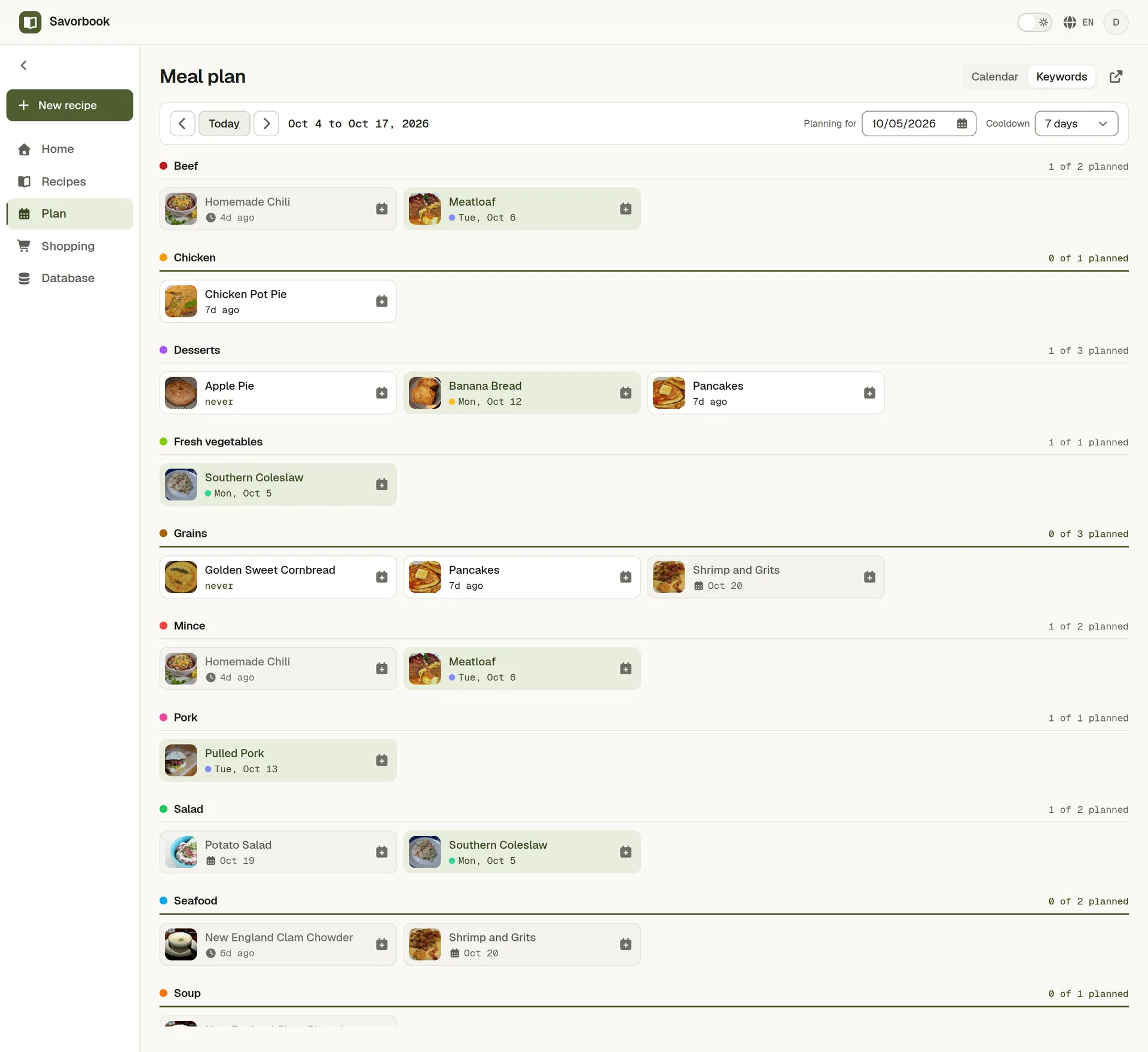
Open the keyword board and look at the meals you actually make. Each one says how long it has been, so the week stops repeating itself without you noticing.
Fill the week
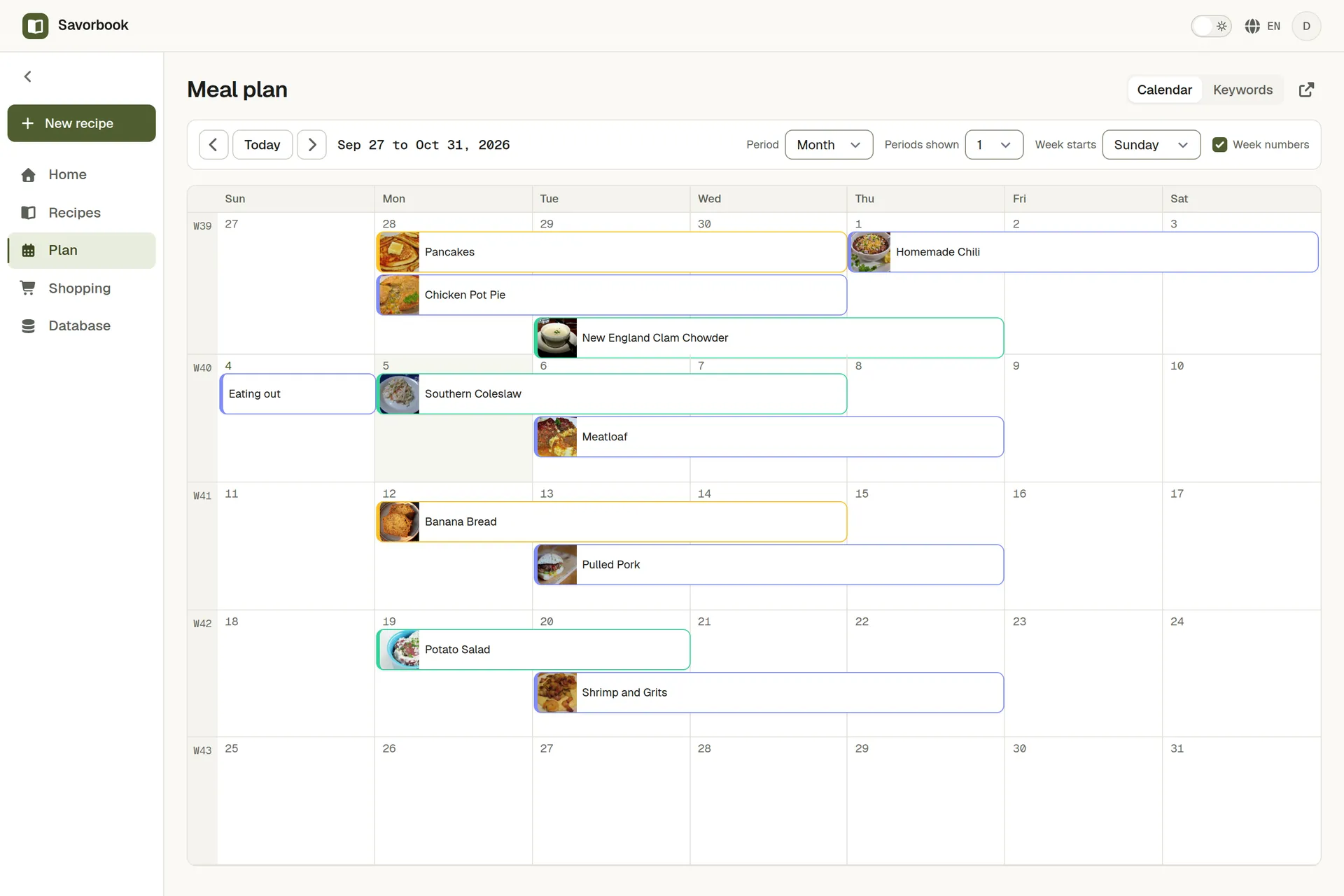
Drag meals onto the calendar, a week or a month at a time. The calendar and the board are two views of one plan, so a change in either shows up in the other without a reload.
Add the plan to your shopping list
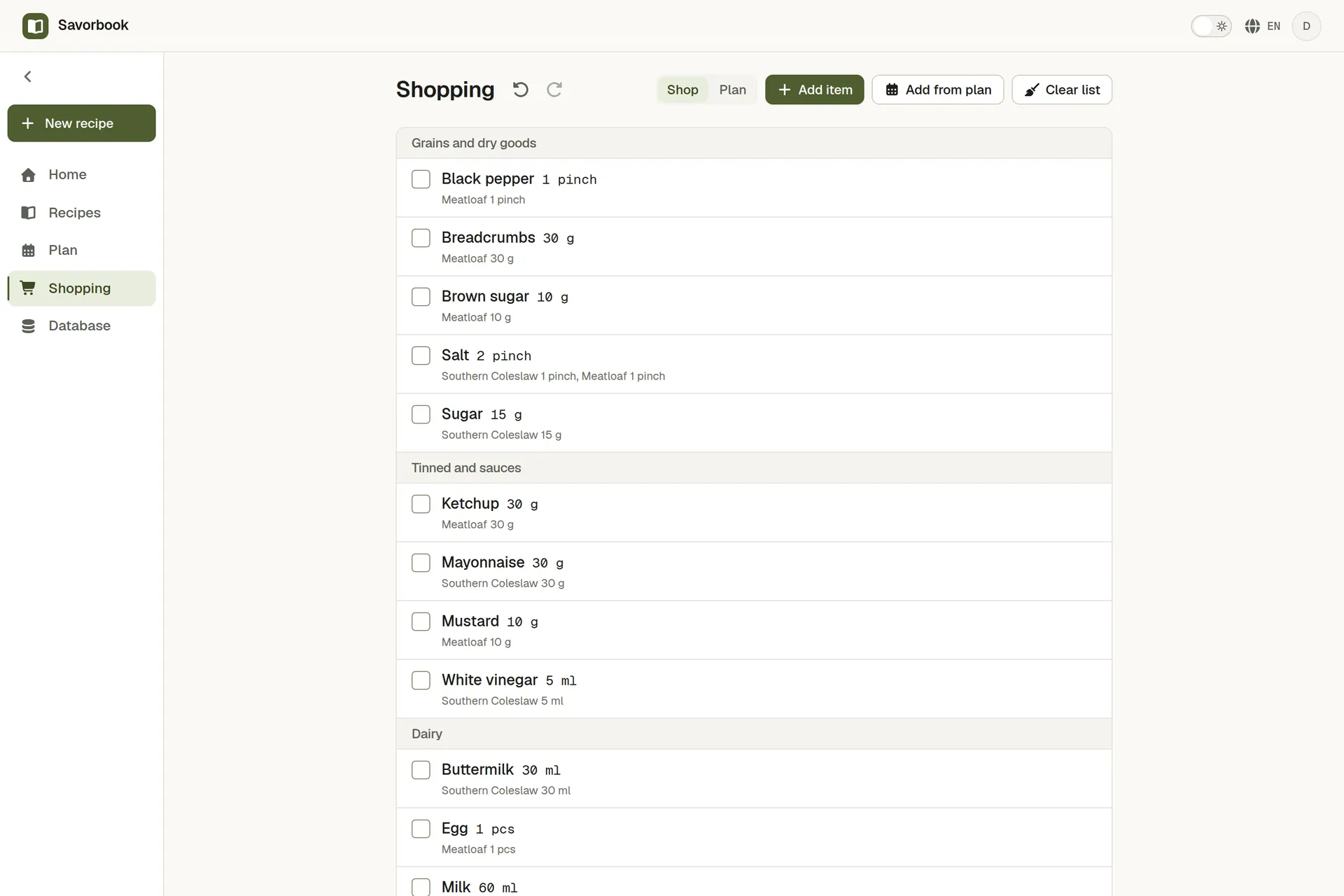
Press Add from plan and the ingredients of the meals you pick land on one list, grouped by aisle and summed across recipes. Coffee, washing up liquid and anything no recipe knows about go on the same list by hand.
Shop together, on one live list
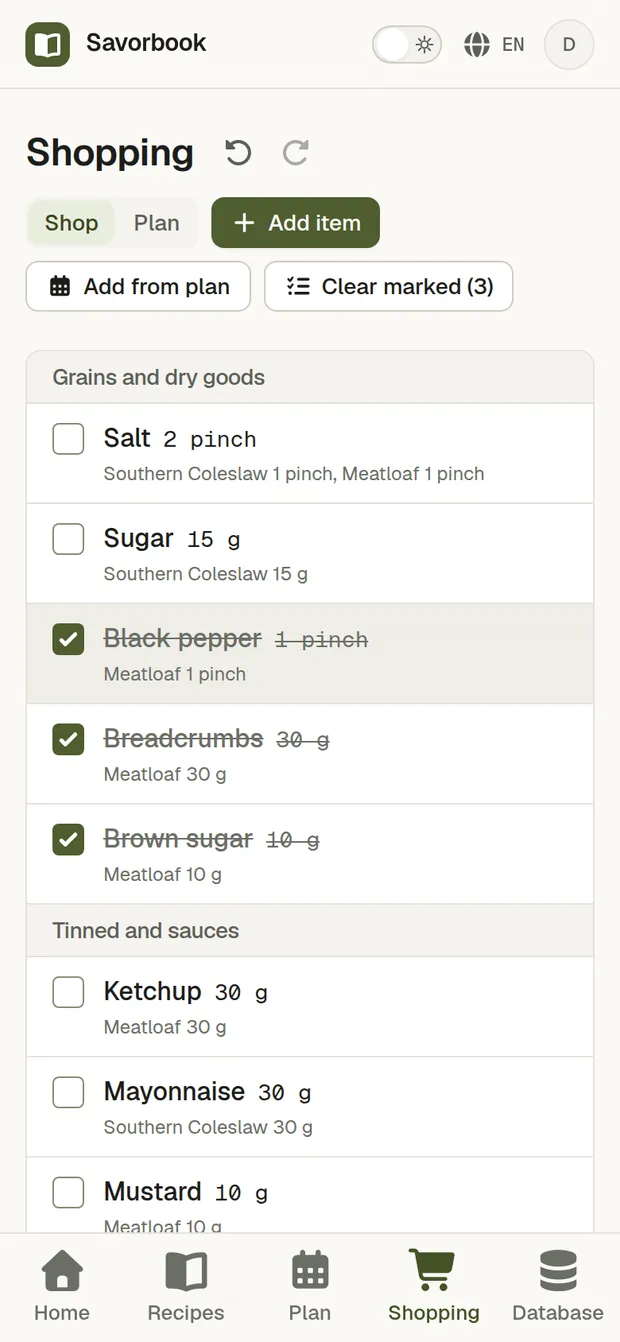
Switch to Shop mode and open the same list on a second phone. Tick something off and it updates on the other straight away, so nobody overwrites anybody.
Cook what you planned
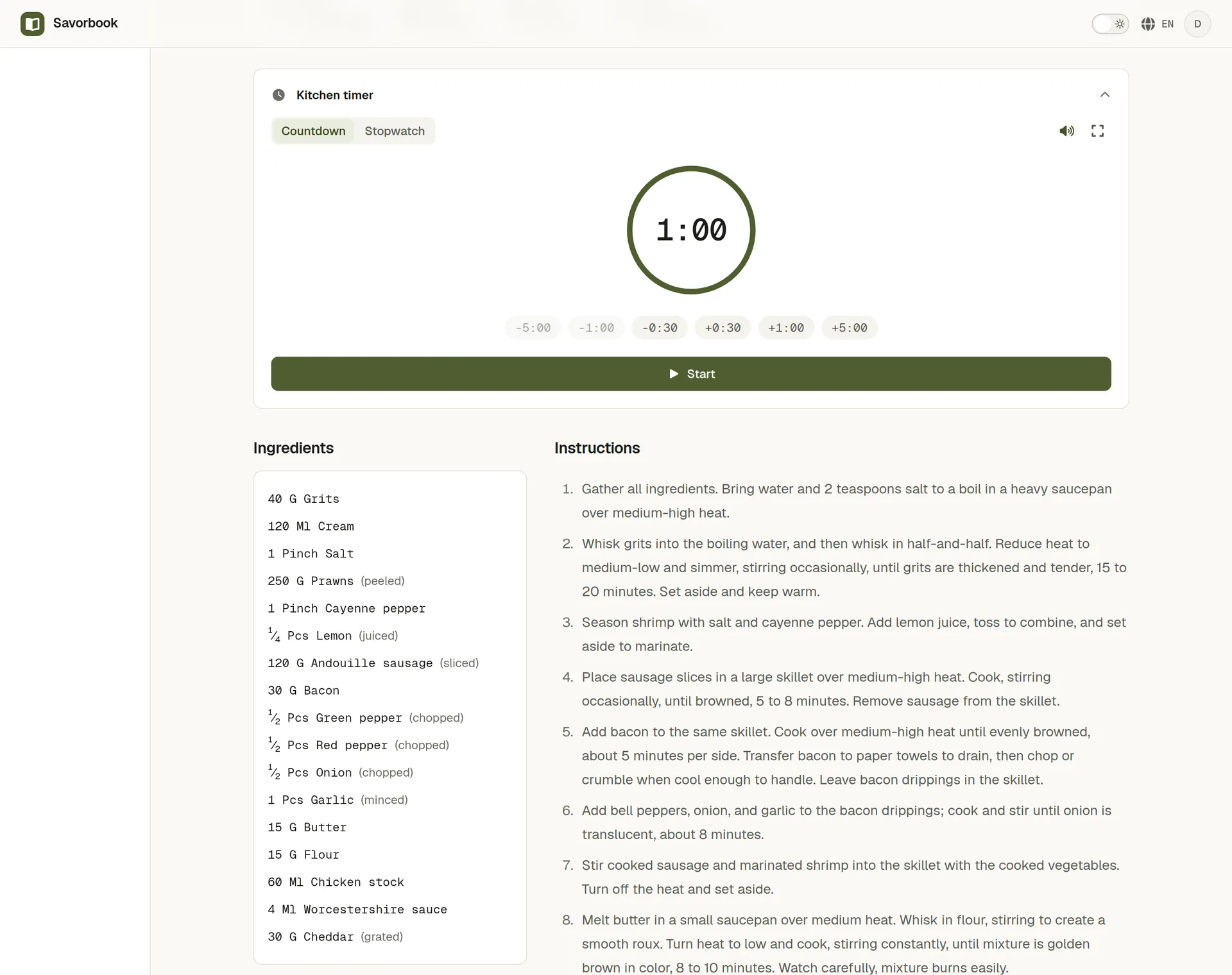
Open today's meal from the plan and go straight through to the recipe. Ingredients, instructions and a timer are on the one page.


Recipes stuck in your bookmarks?
Paste the link and the recipe form fills itself with the photo, ingredients, steps, servings and cooking times. Check it, save it, and it is ready to plan.
- Ingredients land on your foods
- SavorBook matches each line to the foods and units you already have, even when the words come in a different order. Two recipes with onions still ask for onions once on the list.
- Works with 600+ recipe sites
- When a page has no recipe SavorBook can read, it tells you, and you type that one in yourself.

What is underneath
- It remembers what you cooked
- Every recipe carries the day it was last planned, so the board holds the ones resting apart from the ones ready again, against a gap you set from three days to four weeks.
- Search instead of scrolling
- Search the library by name or narrow it by keyword. Every recipe you have written down sits in one place rather than scattered through notes, so planning two weeks costs no more hunting than planning one.
- Your own database
- Foods, units, categories and keywords are yours to define. No fixed list decides what you cook with.
- Instructions that read well
- Write in a real editor with headings, lists and emphasis. Everything is stored as markdown, so the text outlives the editor.
- Sent to Telegram
- Push a recipe or the whole shopping list to Telegram, and cook or shop from your phone without opening a browser.
- Five languages
- English, Spanish, Portuguese, Russian and Chinese, throughout the app rather than only in the menus.
- Light and dark
- A choice you make rather than a guess from your system setting, and it holds wherever you sign in.
Your data leaves whenever you want
Export the whole account as one JSON file: recipes, plans, lists, foods, units, all of it. Import it back, or take it somewhere else. Nothing is held back and nothing has to be asked for.